
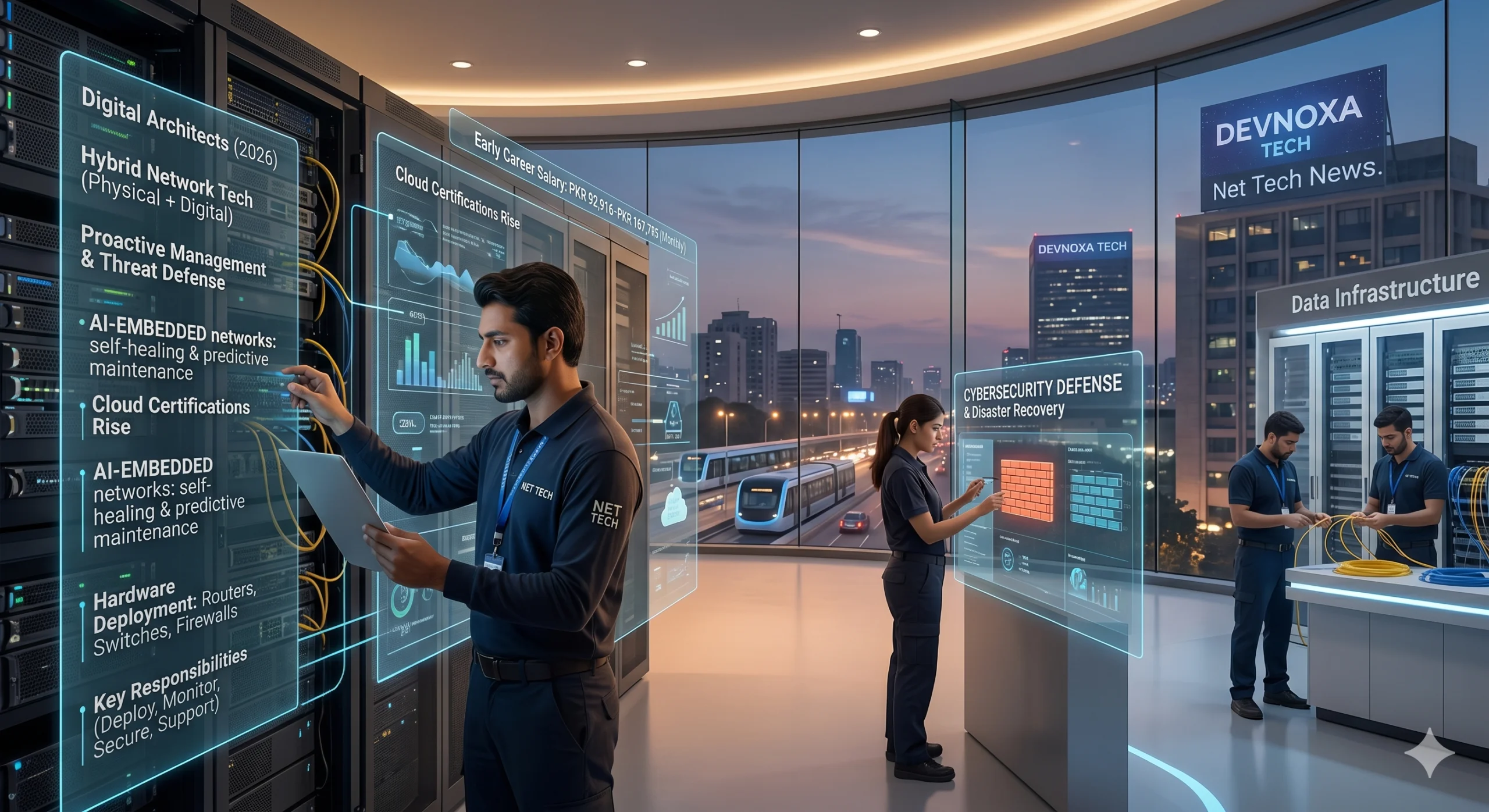

In the rapidly evolving digital landscape, the phrase “it just works” has become a common mantra. But behind the seamless flow of data, the robust security protocols, and the omnipresent connectivity lies a dedicated group of professionals: the network technicians, or as they are often called, “net techs.” These are the individuals who design, build, maintain, and protect the invisible infrastructure that connects us all.
If you are reading this article, your request is likely flowing through a system designed, secured, and optimized by net techs. This job, once focused on simple cable management and device installation, has been utterly transformed. In 2026, the net tech is no longer just a technician; they are a digital architect, an automation specialist, and a critical component of national security.
The Evolution of the Network Technician
Historically, the role of a network technician was highly physical. Success was measured in the quality of Cat 6 cable crimps, the speed of racking servers, and the basic ability to configure IP addresses on routers and switches. While the fundamental hardware—the physical cables and powerful switching engines—remains, the management layers have shifted dramatically.
In 2026, we are in the “Renaissance” of purposeful engineering. The net tech has moved away from manual, device-by-device configuration. They now manage networks using Software-Defined Networking (SDN) and Network Function Virtualization (NFV). Success today is measured in the reliability of the system, the efficiency of bandwidth allocation, and the robustness of security protocols that are often updated on the fly.
A critical shift is the transition from passive troubleshooting to Proactive Network Management. Modern techs use heterogeneous data streams, visualized through central dashboards, to monitor latency and traffic patterns. They are not waiting for a connection to drop; they are using algorithms to predict potential bottlenecks and rerouting data before an outage occurs. This is the difference between simply repairing infrastructure and actively curating a high-performance digital environment.
The AI-Integrated Network: Collaboration, Not Replacement
The defining story of networking in 2026 is the role of Artificial Intelligence (AI). We often hear “Tech Tales” about AI automating jobs, but the reality for net techs is a story of powerful collaboration.
Net techs do not work against AI; they work with AI to operationalize intelligence across the entire infrastructure. AI-powered algorithms analyze vast amounts of data from thousands of network nodes, identifying anomalies that a human might miss. This has created two major advancements:
- AI-Driven Troubleshooting (Self-Healing): AI can detect simple, recurring issues—like a stuck process on a router or an overloaded bandwidth path—and automatically rectify them or suggest a solution. The net tech confirms the action, transforming troubleshooting from a manual, time-consuming process into an instantaneous verification.
- Predictive Maintenance (Wait-for-Break vs. Fix-Before-Failure): By analyzing heterogeneous data on device usage and environment (like heterogenous cooling data in data centers), AI can predict when a component is likely to fail. Net techs can then schedule maintenance during low-traffic periods, completely preventing unplanned outages.
Security: Defending the Front Lines
The increase in connectivity has, unfortunately, been mirrored by an increase in sophistication from digital adversaries. As organizations move toward “hospital-at-home” medical care, automated transport, and smart city infrastructure (all realities in 2026), the network is the battlefield.
Net techs are now essential players in cybersecurity defense. While security specialists focus on malware and access logs, the net tech focuses on secure configurations and immutable paths at the infrastructure level. Their core responsibilities in 2026 include:
- Zero-Trust Implementation: Moving away from the “trusted perimeter” model. Net techs implement micro-segmentation, where every device, user, and application must be verified before gaining access to any part of the network, preventing an attacker from moving laterally even if they gain entry.
- Encrypted Traffic (8K & 5GHz Integration): With high bandwidth image generation and 8K video now the norm, encrypting data at the 5GHz and 6GHz levels is a massive logistical challenge. Net techs are responsible for ensuring this massive data flow is secured with minimal latency.
- Digital Sovereignty Compliance: In an era of global networks, many industries are now required to ensure sensitive data does not leave certain geographic boundaries. Net techs configure network paths and data residency to comply with these critical “geofencing” and digital sovereignty laws.
The Hybrid Cloud and the “Geopatriation” Trend
The biggest strategic shift this decade is how businesses handle cloud infrastructure. We have moved from the “cloud-only” mindset of the late 2010s to a sophisticated, data-driven hybrid strategy. One of the major trends in 2026 is “Geopatriation”—the strategic return of specific, consistent data workloads back from the public cloud onto private servers.
Enterprises have realized that while the cloud offers elasticity, it often comes with unsustainable operational costs (OpEx) for consistent processing. Net techs are the architects of this new, balanced hybrid cloud. They design environments where low latency, high-security data (like financial transaction routing) is handled locally, while unpredictable bursts of data are seamlessly sent to the public cloud.
This requires a skill set far beyond simple configurations. Modern techs must have deep knowledge of virtualization platforms (VMware, KVM), containers (Kubernetes), and orchestration tools (Terraform, Ansible) to link heterogeneous local and cloud-based resources.
Conclusion: Purposeful Engineering for a Connected Future
The net tech of 2026 is no longer just a support worker; they are a strategic asset. They are the professionals who understand how to transform end-to-end network processes, ensuring that innovation is grounded in stable, secure, and efficient digital infrastructure.
From small businesses managing websites like devnoxatech.com to international logistics hubs coordinating autonomous transport, the net tech is the silent architect of modern society. By combining deep technical expertise with strategic vision and AI collaboration, they are providing the stable framework that allows the rest of us to innovate, create, and connect without hesitation.
As we continue to push the boundaries of what is possible in the digital age, the network technician will remain a vital component, ensuring that the technology we depend on truly works, with minimal fuss and maximum impact.
For those looking to build their own technical foundations or seeking a partner to navigate the high-stakes world of digital growth and IT transformation, the journey begins with understanding the framework of the future. devnoxa tech