
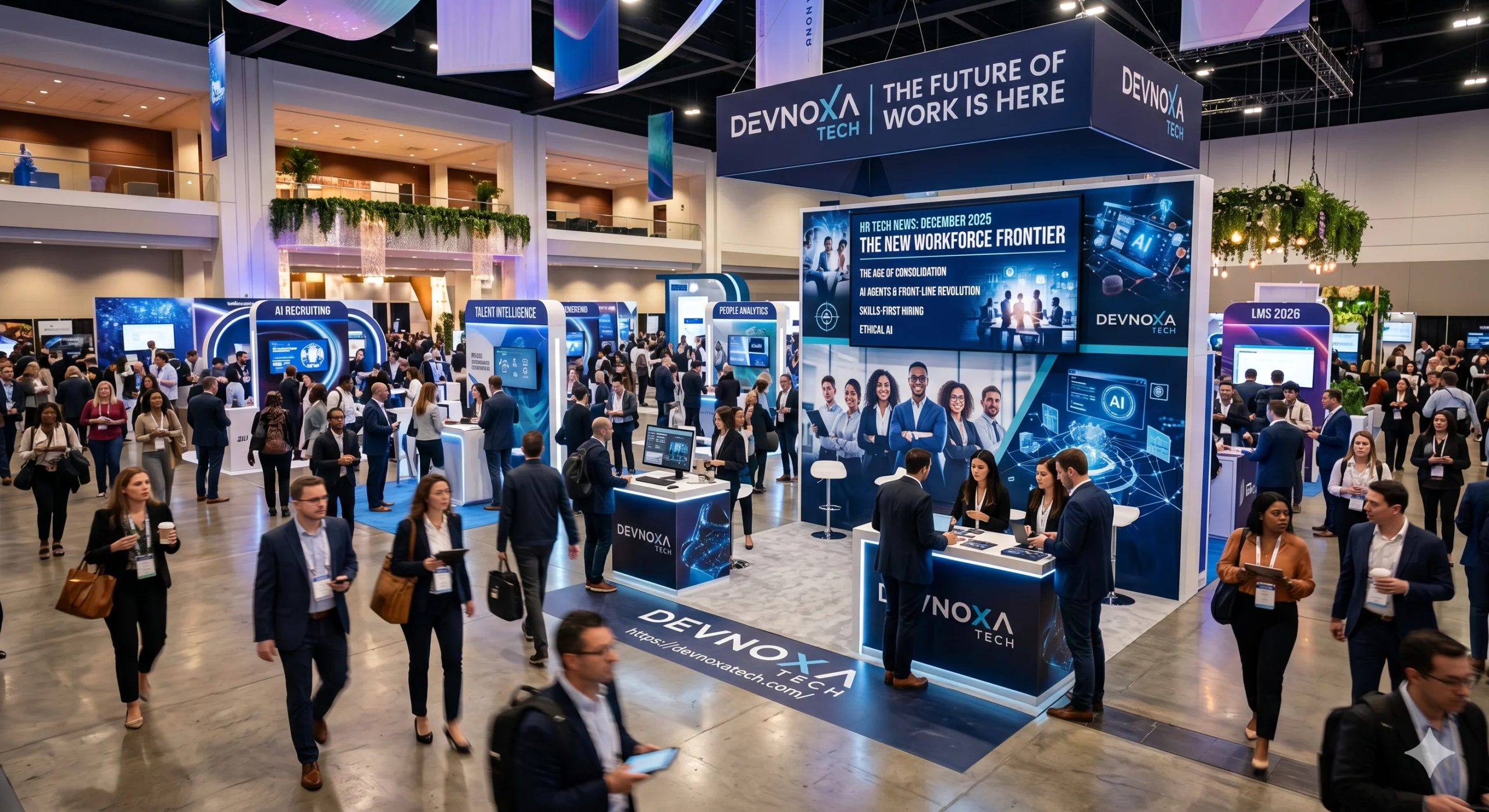

As the final weeks of 2025 wind down, the HR Tech landscape is undergoing a transformation that feels less like a series of updates and more like a total systemic overhaul. If the early 2020s were about reacting to change, December 2025 is about predicting it. We are seeing a massive consolidation of tools, a move toward “agentic” AI, and a definitive shift away from traditional hiring metrics.
The headline news this month is dominated by massive acquisitions and the rollout of software that doesn’t just “help” HR professionals, but actively partners with them. From the rise of autonomous recruiters to the push for total financial transparency, here is the state of HR tech as we head into 2026.
The Age of Consolidation
The HR tech market spent much of 2025 trimming the fat, and December has brought some of the most significant merger and acquisition deals of the year. We are moving away from the “app fatigue” era, where HR teams had to juggle twelve different logins for payroll, benefits, and hiring. Instead, the “Super App” for work has finally arrived.
A major move that sent ripples through the industry this month was the finalized integration of Paradox into the Workday ecosystem. This acquisition represents a turning point for high-volume hiring. By embedding conversational AI directly into one of the world’s largest HCM platforms, the “application form” as we know it is effectively dead. For frontline workers at companies like FedEx or McDonald’s, the hiring process is now entirely chat-based and mobile-first.
Similarly, SAP’s move to fully absorb SmartRecruiters into its SuccessFactors suite signals that the industry’s “Big Three” are no longer content with being back-end databases. They want to own the entire candidate experience. These mergers are not just about market share; they are about data. By owning the recruiting tool and the payroll system, these giants can now track the “lifetime value” of an employee from the first chat message to their final exit interview.
From Chatbots to AI Agents
If 2024 was the year of the chatbot, December 2025 is the month of the AI Agent. The difference is subtle but profound. A chatbot waits for you to ask a question; an agent takes action on your behalf.
Findem’s acquisition of Getro earlier this month is a perfect example. They launched what they call “Intelligent Job Posts.” These aren’t just descriptions on a board; they are autonomous entities that actively search the web, identify qualified candidates within private networks and VC portfolios, and reach out with personalized pitches. In this new model, the “job post” is essentially a digital headhunter that works 24/7.
Inside the office, we are seeing similar autonomy in workforce management. Platforms like Employment Hero and UnDesked released December updates that focus on “Advanced Assignment Triggering.” For the first time, software can now look at a project’s progress, realize a skill is missing, and automatically suggest an internal transfer or open a freelance requisition without a manager ever clicking a button.
The Frontline Revolution
For years, HR tech focused almost exclusively on desk-bound office workers. December 2025 has officially flipped that script. Some of the most innovative releases this month are aimed squarely at the “undesked” workforce—those in retail, manufacturing, and healthcare.
The “Collaborators” feature released by UnDesked this month allows frontline teams to edit compliance and safety documents in real-time across shifts. Meanwhile, the push for “Earned Wage Access” (EWA) has reached a fever pitch. With Zellis acquiring the financial wellbeing platform Hastee, the industry is moving toward a world where the “monthly paycheck” is an archaic concept. Workers can now access their earnings as they earn them, integrated directly into their HR mobile app. This is no longer a perk; by the end of 2025, it has become a standard requirement for attracting hourly talent.
Skills Over Pedigree
Perhaps the most significant cultural shift reflected in this month’s tech news is the death of the traditional resume. Data from December’s talent trends reports shows that 81% of organizations have moved to a “skills-first” hiring model.
New tools from companies like iCIMS and Humanly are now using “interview intelligence” to analyze the actual substance of a conversation rather than the keywords on a PDF. By using AI to record and score interviews based on demonstrated problem-solving skills rather than where someone went to college, companies are finally seeing a measurable reduction in hiring bias. This technology has moved from a “experimental” phase into a core requirement for any enterprise-level ATS (Applicant Tracking System).
Data Privacy and the Ethical Pushback
Of course, with this much AI and data collection, the conversation around ethics has never been louder. In December 2025, we are seeing the first major wave of “Transparency Portals.” Employees are no longer willing to let an algorithm decide their bonus or their promotion path without knowing why.
New compliance modules released this month by major providers now include “Algorithm Explanability” features. If an AI suggests that an employee is at high risk of quitting, the manager can now see exactly which data points—declining engagement scores, missed training sessions, or external market salary shifts—led to that conclusion. This “Glass Box” approach to AI is the industry’s response to growing regulatory pressure and employee skepticism.
The Road to 2026
As we look toward the new year, the theme is clear: HR technology is no longer an administrative tool. It has become the operating system for the modern business. The news from December 2025 shows us a world where hiring is instantaneous, payroll is continuous, and “talent intelligence” is the most valuable asset a company owns.
For HR leaders, the challenge is no longer finding the right tool—it’s finding the right way to stay human in a landscape that is becoming increasingly automated. The companies winning at the end of 2025 are those that use this technology to remove the “paperwork” of being a person, allowing managers to focus on what they do best: mentoring, coaching, and building culture.
The era of “Human Resources” is being replaced by the era of “Human Potential,” powered by an invisible, intelligent, and incredibly fast layer of technology. devnoxa tech